Meta Description: Explore the best solar powered gadgets for camping in 2026. From TOPCon panels to LiFePO4 power stations, get the expert gear guide for off-grid power.
Best Solar Powered Gadgets for Camping 2026
In 2026, the dream of “unplugging” while staying fully powered has finally become a reality. The outdoor industry has shifted from heavy, unreliable glass panels to high-tech, modular solar ecosystems. Whether you are a solo backpacker tracking miles via GPS, a digital nomad running a Starlink Mini from a remote forest, or a family keeping a portable fridge cold in the desert, solar technology is no longer just a backup—it is the backbone of the modern campsite.
This guide provides a deep-dive into the best solar-powered gadgets for camping, the science behind the 2026 upgrades, and how to build a power system that never leaves you in the dark.
The 2026 Solar Revolution: What’s New?
Before we list the gear, it is essential to understand the “Big Three” technologies that have redefined camping this year:
-
TOPCon Solar Cells: Replacing the older Mono-PERC standards, Tunnel Oxide Passivated Contact (TOPCon) cells now push efficiency past 23-25%. This means smaller panels can now produce more power, even in the low-light conditions common in regions like the Pacific Northwest or Northern Europe.
-
GaN (Gallium Nitride) Integration: Power stations and chargers have shrunk by 30% while running cooler. GaN allows for higher power density, enabling pocket-sized chargers to push 100W+ through a single USB-C port.
-
LiFePO4 (Lithium Iron Phosphate) Dominance: Safety is now the standard. Unlike older lithium-ion batteries, LiFePO4 chemistry is chemically stable, has a 10-year lifespan (3,000+ cycles), and poses virtually zero risk of “thermal runaway” or fire in a hot tent.
Essential Solar Gear: Category Breakdowns
1. Portable Solar Power Stations (Solar Generators)
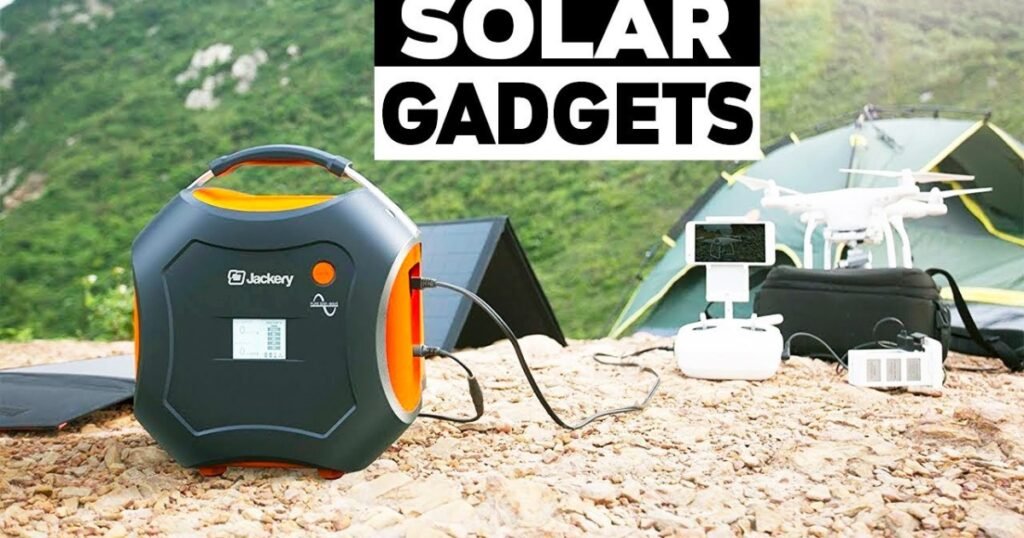
The “brain” of your campsite. These units store the energy your panels collect. In 2026, we look for Pure Sine Wave inverters to protect sensitive electronics like laptops and CPAP machines.
-
Best for Families: EcoFlow Delta 2 or Jackery Explorer 2000 Plus. These provide enough “Watt-hours” (Wh) to run a portable fridge and electric grill simultaneously.
-
Best for Remote Work: Look for units with USB-C PD 3.1 ports. This standard supports up to 140W-240W, enough to fast-charge high-end workstation laptops without a bulky AC adapter.
2. High-Efficiency Foldable Solar Panels
The days of rigid, heavy frames are over. Today’s best panels use ETFE (Ethylene Tetrafluoroethylene) coating, which is more durable and UV-resistant than cheap PET plastics.
-
The Bifacial Advantage: If you are camping on sand, snow, or light-colored gravel, Bifacial Solar Panels (like the EcoFlow 220W Bifacial) are a game-changer. They have cells on both sides, capturing reflected light from the ground to boost energy yield by up to 25%.
-
Ultralight Backpacking: The BioLite SolarPanel 5+ remains a favorite for its integrated sundial, ensuring you always have the perfect angle to the sun for its 3,200mAh internal battery.
3. Smart Lighting & Ambience
Solar lanterns have evolved into multi-tools.
-
BioLite Luci Charge 360: A collapsible 360-lumen lantern that doubles as a phone charger. Its IP67 rating means it can survive a literal dunk in a lake.
-
Solar String Lights: Perfect for “Mixed” audiences—B2C families love the mood lighting, while B2B event organizers use them for pathway safety. Models from MPOWERD now feature 44-foot strands that charge via a detachable solar hub.
Power Audit: How Much Solar Do You Actually Need?
One of the biggest pain points for campers is “Wattage Confusion.” Use the table below to calculate your daily requirements for a typical 3-day trip.
Daily Power Calculation Table (12V System)
| Device | Avg. Consumption | Hours/Day | Total Daily (Wh) |
| Smartphone | 10W | 2 | 20Wh |
| Laptop | 60W | 3 | 180Wh |
| LED Lantern | 5W | 4 | 20Wh |
| Portable Fridge | 40W | 24 (Cycles 25%) | 240Wh |
| Starlink Mini | 25W | 4 | 100Wh |
| TOTAL | 560Wh |
The 2026 Rule of Thumb: To replenish 560Wh in a single day (assuming 5 hours of “Peak Sun”), you need at least 150W of solar panels. Always “oversize” your solar by 20% to account for passing clouds and atmospheric haze.
Professional & B2B Use-Cases: Fieldwork & Remote Ops
Camping gear is no longer just for vacations. Field researchers, drone pilots, and remote content creators now use “Expedition Grade” solar setups.
-
Starlink Mini Support: The Starlink Mini consumes roughly 20-40W. To run this 24/7 off-grid, you need a minimum of a 1000Wh battery and 300W of solar input to stay “energy positive.”
-
Drone Charging: High-capacity GaN-based power stations can fast-charge 4-5 drone batteries simultaneously, a critical feature for professional videographers in remote locations.
Regional Performance: The GEO Factors
Solar gear doesn’t perform the same everywhere. Your location dictates your equipment choice.
-
Desert/High UV (Arizona, Sahara, Outback): Monocrystalline panels are king. Ensure your gear has high Heat Dissipation capabilities, as solar efficiency actually drops when panels exceed 77°F (25°C).
-
Overcast/Northern Latitudes (UK, PNW, Scandinavia): Prioritize CIGS (Copper Indium Gallium Selenide) thin-film panels. They are less sensitive to partial shading (like a tree branch blocking one corner) compared to traditional crystalline cells.
-
High Altitude (Alps, Rockies): Thinner air increases UV intensity. You will charge faster, but ensure your cables are IP68 rated to handle rapid temperature swings and intense radiation.
Buying Guidance: The “Modular Power Framework”
Instead of buying a random assortment of gadgets, build your system in three tiers:
-
Tier 1 (The Foundation): A high-capacity LiFePO4 Power Station. This is your “bank.”
-
Tier 2 (The Input): Foldable TOPCon or Bifacial solar panels. This is your “income.”
-
Tier 3 (The End-Points): USB-C lanterns, water filters, and GPS units. These are your “expenses.”
Decision Trigger: If you are car camping, prioritize Capacity (Wh). If you are backpacking, prioritize Power-to-Weight Ratio (W/kg).
Common Mistakes to Avoid
-
Charging Behind Glass: Placing a solar panel on a dashboard reduces efficiency by up to 50% due to light refraction and heat. Always place panels outside in direct airflow.
-
Mixing Brands Without Adapters: While most brands now use the MC4 or Anderson Powerpole standards, always check for proprietary connectors before heading into the wild.
-
Ignoring “Vampire Draw”: Cheap inverters consume power even when nothing is plugged in. Always look for units with an “Auto-Off” or “Eco-Mode” for the inverter.
People Also Ask (FAQs)
1. Can solar panels charge a camping fridge?
Yes. A modern 12V compressor fridge usually requires a 100W-200W solar panel paired with a 500Wh+ power station to ensure it runs through the night and during cloudy spells.
2. Is it safe to leave a solar power bank in the sun?
Technically, the panel needs the sun, but the battery hates it. High heat degrades lithium cells. In 2026, the best gear features “Detachable Hubs” where the panel stays in the sun, but the battery remains shaded.
3. How do I clean my camping solar panels?
Use a soft microfiber cloth and plain water. Avoid abrasive soaps or “glass cleaners” that can leave a film, reducing the Photovoltaic (PV) efficiency.
4. What happens to solar power when it’s cloudy?
Power output drops to roughly 10-25%. This is why having a larger battery (energy storage) is more important than having a large panel in overcast regions.
5. Are flexible solar panels better than foldable ones?
Flexible panels are great for permanent mounting on curved van roofs. However, for general camping, foldable panels are superior because you can “track” the sun by moving them throughout the day.
6. What is an MPPT charge controller, and do I need one?
MPPT (Maximum Power Point Tracking) is an electronic system that optimizes the voltage match between panels and batteries. It is up to 30% more efficient than older PWM controllers and is a must-have for 2026 setups.
7. How do I recycle my old camping batteries?
Most 2026 manufacturers (like Jackery and EcoFlow) now offer “Take-Back” programs. Never throw LiFePO4 batteries in standard trash; use certified e-waste centers to ensure cobalt and lithium recovery.
Conclusion
Building a solar-powered camping ecosystem is about more than just gadgets; it’s about freedom. By investing in TOPCon efficiency, LiFePO4 safety, and GaN portability, you can extend your adventures indefinitely.
To get started, perform a “Power Audit” on your current electronics. If your daily needs exceed 300Wh, start looking at a modular power station and at least 100W of foldable solar input. The sun provides the energy for free—you just need the right tools to catch it.